
What is the reason I require an WiFi QR code generator?
Prior to this there was no method to connect to an WiFi network, other than choose a network from a menu and then type in an individual password. The WiFi QR Code Generator lets you create an QR Code that allows you to connect to an WiFi network by simply using your camera to scan it, or using the QR Code scanner. The most important thing? The best part? WiFi QR Code generator is totally accessible for use at no cost and the QR Code will not expire (unless the settings on your router have changed). With an WiFi QR Code users can share their WiFi with your family, friends, and customers if you own your own business.
Table of Contents
My WiFi network is not visible and I’m unable to create the QR Code?
Absolutely. You just need to mark to the “Hidden” checkbox next to the name field of your network on our Wifi QR Code Generator. If your network isn’t concealed, but you want to enable this feature consult the user instructions on your device or read the tutorial to how to conceal your network on the majority of modern routers.
Which security protocol do you require to secure my WiFi? WPA/WPA2, WEP or None?
WPA/WPA2 is the safest option, as well as the default option for the majority of WiFi connections. If you’re unsure then always select this option. This does not mean that the WiFi is unprotected, and available to everyone.
How can I create an WiFi QR Code on easycodescan?
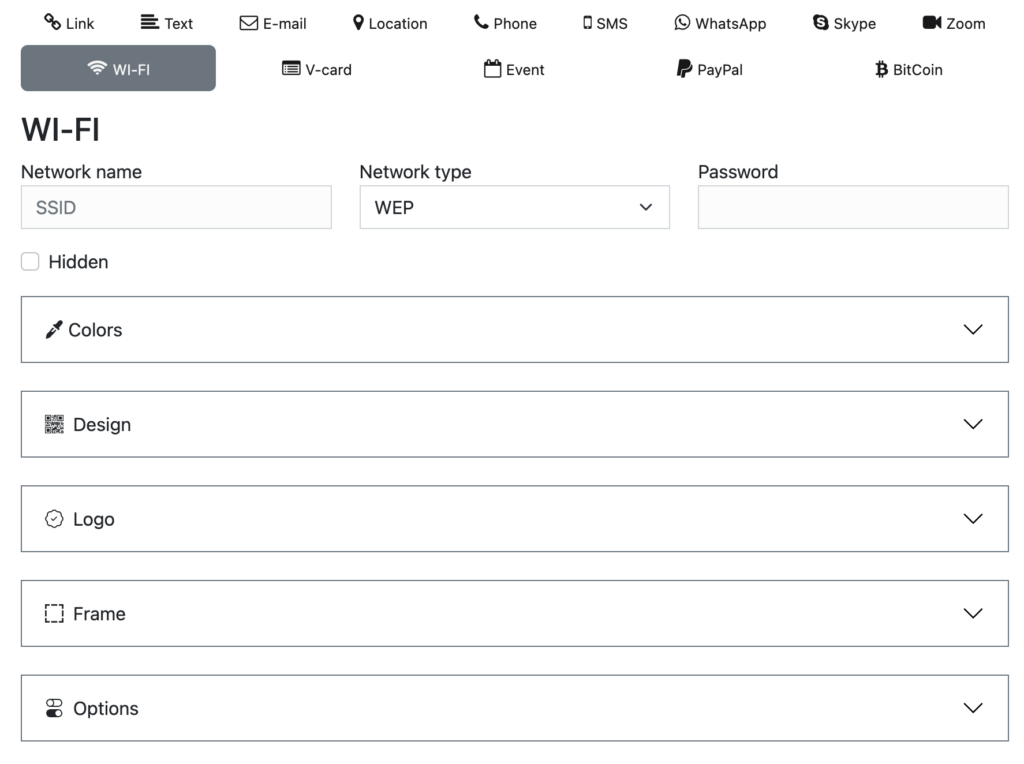
- Input the address of your WiFi network into the field for network names. Be sure that you match the network name you see on your router.
- If this is a secret network, mark the box that says ‘Hidden’ right next to the field.
- Input your WiFi username (case specific) and then select your encryption protocol you’ve selected on your WiFi network. You can choose to leave the field for password unfilled in case the network isn’t password-protected.
- You can then add a frame to it and alter the color that appear on your QR Code to make it stand out.
- Download your personalized QR code for free!
What data is stored inside the WiFi QR code?
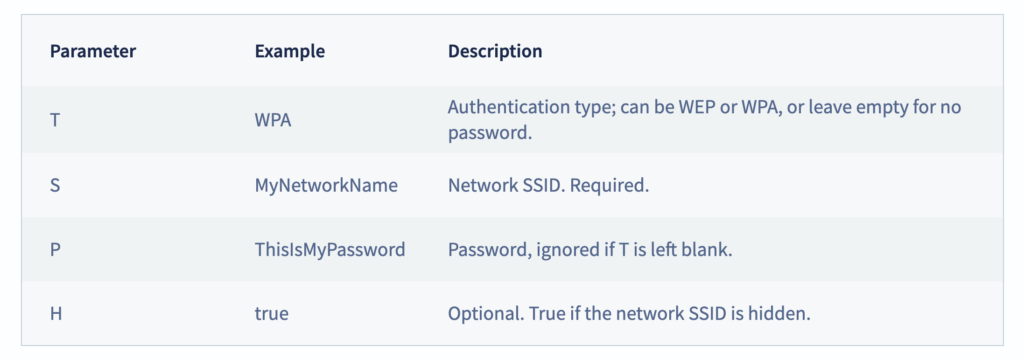
Your WiFi QR Code Generator reader will be able to scan and identify the WiFi QR Code Generator if they’re configured correctly in no particular order; WIFI:T:WPA;S:MyNetworkName;P:ThisIsMyPassword;
Do I sign up to the WiFi network using the QR Code?
To test the newly created WiFi QR Code Generator or if you’ve already encountered the one you’ve created, all you need to do is launch Camera app in your phone and then place it in front of the Code. An alert will pop up asking for you to sign in to your wireless connection. If that doesn’t work, examine your settings and make it clear that QR Code scanning feature is activated. Are you still having problems? All you need do is install an external QR Code scanner to your phone’s app store.
What are the advantages sharing my WiFi by using an QR Code?
Family members and friends
If family and friends come to visit, it can be difficult to explain to each individual the settings on your WiFi. The first step is to instruct them to choose the network they want to connect to from a list, then say the password in loud voice and ensure that they’re connected within just one attempt (which in some way isn’t the norm). If you have a WiFi QR Code Generator you simply need to display the QR Code to them and then scan it in order to join the WiFi network.
Rentals or Airbnbs
If you manage an Airbnb or a renting property it’s an excellent idea to utilize the WiFi QR Code Generator to connect to the network. The guests are able to look up the QR Code and access the internet without needing to enter an account password. This will enhance the experience of your guests and will leave a lasting impression.
Cafes, restaurants or restaurants
It’s true that most customers will want to know the WiFi password when they visit your cafe or restaurant. But wouldn’t it be nicer to display it as an WiFi QR Code Generator on tables, on the walls perhaps even on their receipts? So that your customers could simply scan the QR Code and connect to WiFi without needing to request the WiFi password each time.
Offices of the government
WiFi and offices for government aren’t usually mentioned together in the same paragraph. So we need to change that. The wait times for these places (we’re taking a look at us, DMV) are typically very long. How can you ease the burden by allowing your visitors to join your network so they can surf the internet while waiting? By using our WiFi QR Code Generatorfor you can connect your WiFi network to your waiting ticket.
Clinics and hospitals
waiting in the hospital or at the clinic is stressful. The internet is an ideal option for keeping your patient and families entertained, particularly when you’re understaffed and overloaded. With the WiFi QR Code Generator you can connect to the WiFi network with your patients and let them scan it while waiting in the waiting area without disturbing anyone in the staff.
Cities (tourism offices, parks and public spaces meetings spots, tourist offices)
As a city, the addition of WiFi in public spaces will make it more appealing for locals and tourists to come and relax. Users can connect easily to find the location that interest them and upload pictures of your stunning sights through social networking sites. Put WiFi QR codes on lamp posts, signs or as well on the benches that people will probably sit and relax to join the Internet and explore more places to do or see within your city.
FAQ
What exactly is WiFi?
Many believed that the word is a reference to Wireless Fidelity, this is in fact a myth. WiFi is an entirely invented name created by a branding firm that sells Wi-Fi products. There’s also an error in spelling and. Is it WiFi, or Wi-Fi? WiFi is simply the name we’re used to, but Wi-Fi without the hyphen is the proper trademark that is registered. To make it simple and straightforward, WiFi transmits information or data through the air via radio waves made with the help of wireless router. In order to emit radio waves, the device receives information from the internet through your broadband, and transforms it into radio waves that have frequencies of 2.4 gigahertz, or 5.8 gigahertz.
I appreciate you sharing this blog post. Thanks Again. Cool.